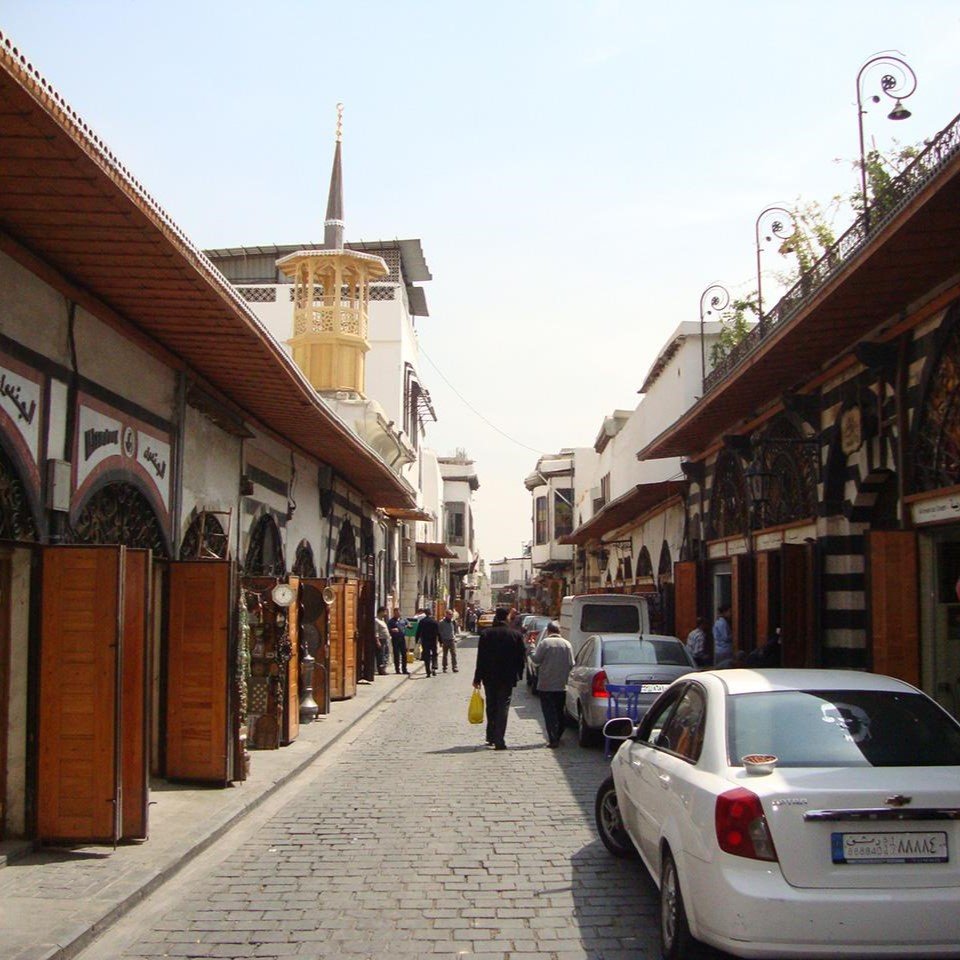
al Shāriʿ al Mustaqīm
Straight Street — known in Arabic as al Shāriʿ al Mustaqīm and in Latin as Via Recta — has been the main east–west artery of Damascus since the city’s Hellenistic redesign in the 3rd–2nd century BC, when the Seleucids, following the grid plan of Hippodamus, laid it out as the decumanus maximus. Under Roman rule it was widened to about 26 meters, lined with colonnades, and stretched for roughly 1,500–1,570 meters from Bab Sharqi in the east to near Bab al Jabiya in the west. Mentioned in the New Testament’s Acts of the Apostles as the “Street Called Straight,” it is where Ananias was instructed to find Saul of Tarsus after his vision on the road to Damascus — a moment central to Christian tradition. Over the centuries, the street witnessed Byzantine processions, Islamic era markets, and Ottoman renovations, while parts of its original Roman paving now lie several meters below the modern surface. Today, though narrower and bustling with souqs, Straight Street still follows the same ancient line, carrying more than two millennia of layered history in its stones.