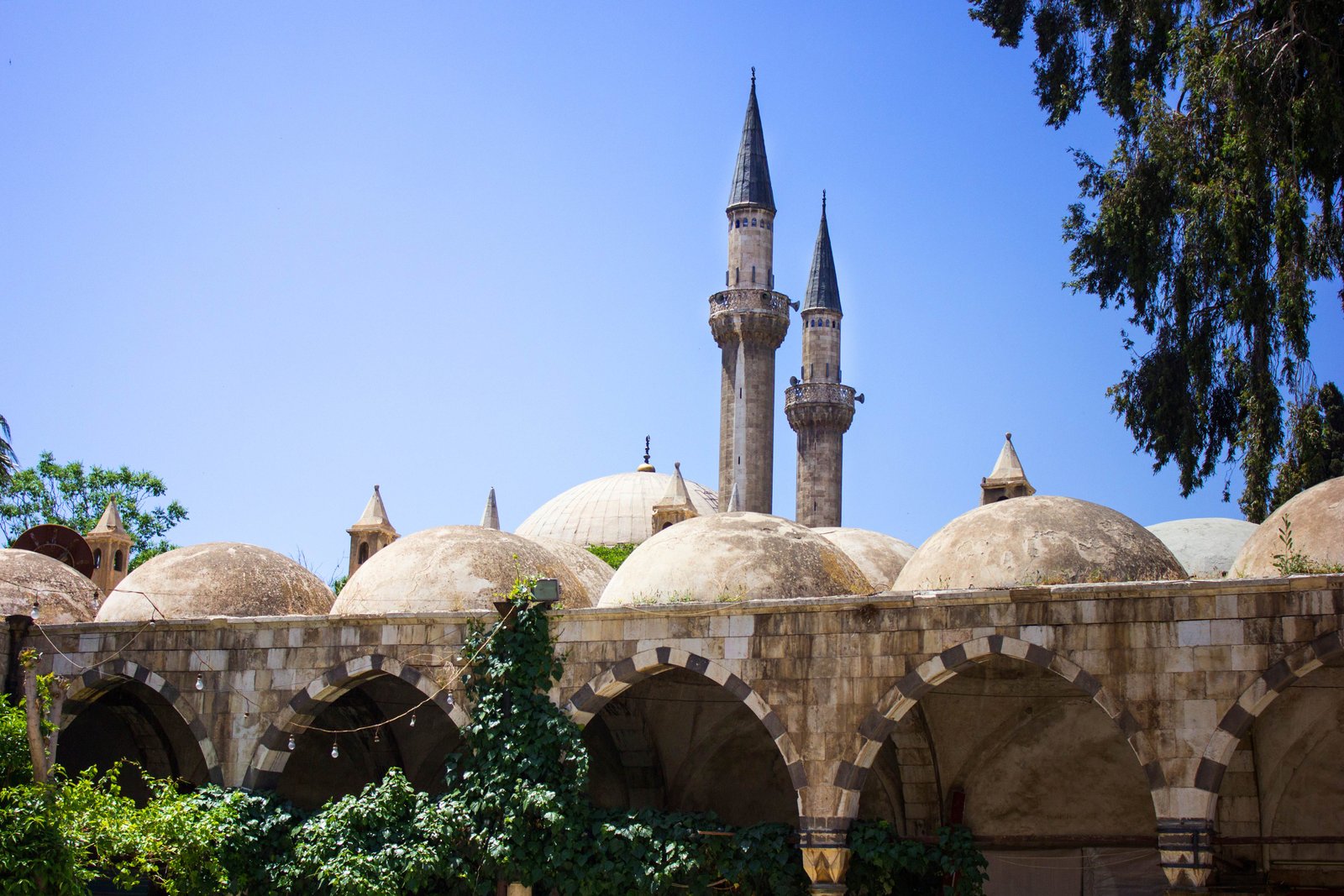
al Tekeyeh al Sulaymaniyyeh
Rising on the banks of the Barada River, al Tekeyeh al Sulaymaniyyeh is one of Damascus’s most important Ottoman monuments, embodying both imperial ambition and local heritage. Commissioned in the mid 16th century by Sultan Suleiman the Magnificent and designed by the celebrated architect Mimar Sinan, it marked the arrival of classical Ottoman architecture in Syria. Built between 1554 and 1559 on the ruins of a Mamluk palace destroyed by Tamerlane, the complex served as a takiyya — a combined mosque, hospice, and lodging for pilgrims on the Syrian Hajj route. Its harmonious domes, twin minarets, and serene courtyards reflected the empire’s architectural ideals, while its charitable functions reinforced Damascus’s role as a spiritual and logistical hub for pilgrims bound for Mecca. Over the centuries, al Tekeyeh al Sulaymaniyyeh has remained a symbol of the city’s integration into the Ottoman world, a testament to Damascus’s enduring position at the crossroads of faith, culture, and empire.