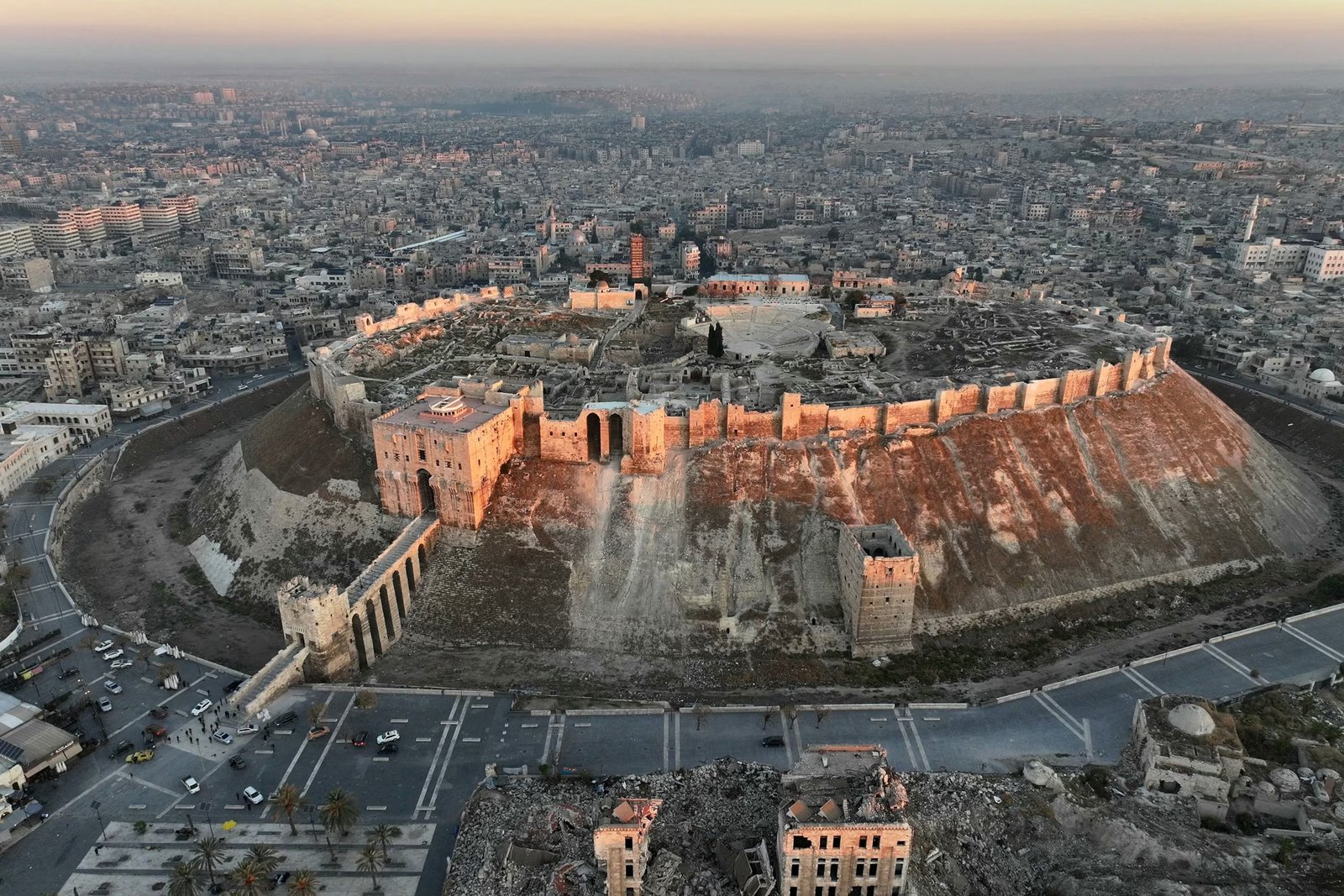
Aleppo
One of the world’s oldest continuously inhabited cities, Aleppo has been a prize and a crossroads for over five millennia, its story etched into every stone. From its earliest mention in the archives of Ebla in the 3rd millennium BCE as a sacred city to the storm god Hadad, it grew under Amorite kings, flourished as a Hittite stronghold, and later became part of the Assyrian, Babylonian, and Persian empires. Conquered by Alexander the Great in 333 BCE, it passed through Hellenistic and Roman hands before becoming a key Byzantine frontier city. In 637 CE, Muslim forces under Khalid ibn al Walid took Aleppo, ushering in centuries of Islamic rule under the Umayyads, Abbasids, Hamdanids, and Seljuks. The Ayyubid and Mamluk eras fortified the city’s crown jewel — the Citadel of Aleppo — which rose over the site of ancient temples, its monumental gates and towers guarding the city through Crusader sieges and Mongol invasions. Under the Ottomans from 1516, Aleppo became a thriving hub on the Silk Road, its vast covered souks and caravanserais serving merchants from Europe, Persia, and Arabia. Even in modern times, through conflict and reconstruction, Aleppo remains a living archive of the civilizations that have claimed it, each leaving behind layers of architecture, culture, and legend.