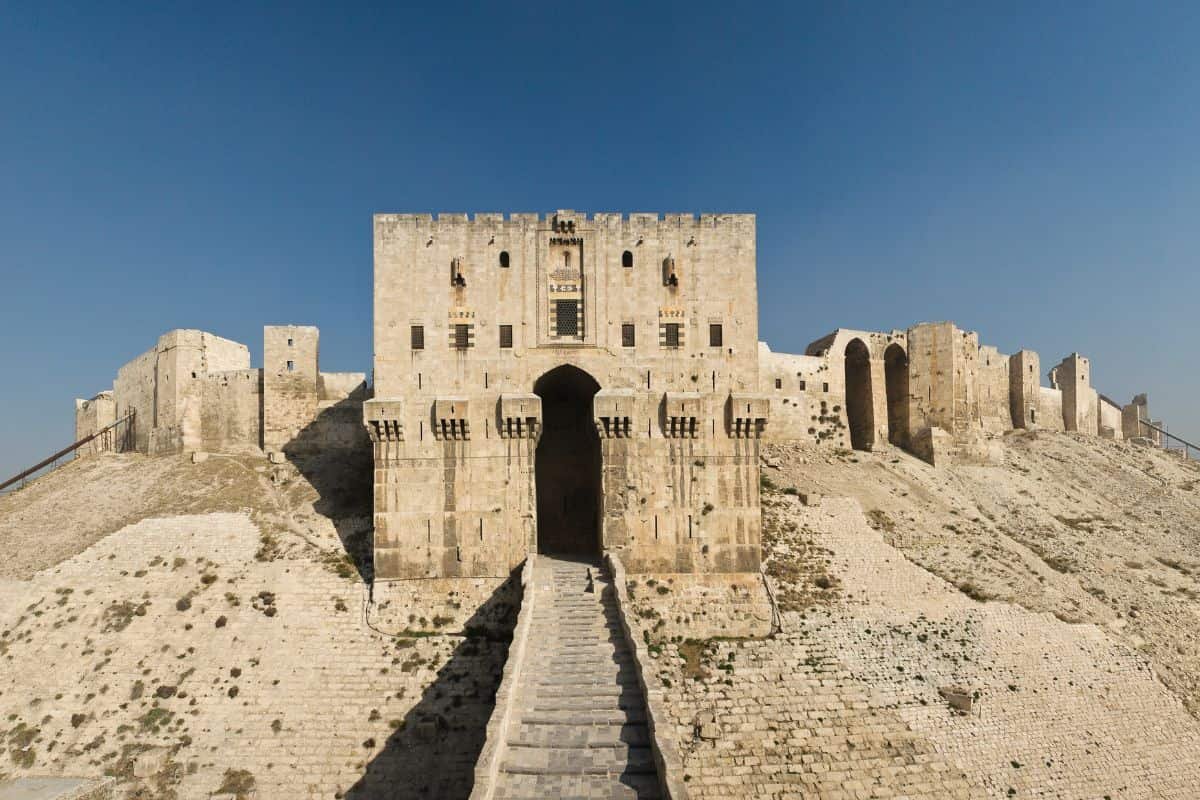
Citadel of Aleppo
The Citadel of Aleppo proudly rises above the heart of the old city. It is not merely walls and stone towers, but a living record spanning more than four thousand years of history. Archaeological evidence indicates that this mound was a sacred ground as early as the third millennium BCE, crowned with a temple dedicated to the storm god Hadad. Many civilizations succeeded one another here—from the Neo-Hittites and Assyrians to the Greeks and Romans—each leaving its mark and reshaping the summit to suit its era.
The citadel reached its most splendid form in the twelfth and thirteenth centuries under the Ayyubid rulers, heirs to the legacy of Saladin, who transformed the mound into one of the mightiest fortresses of the medieval Islamic world. They built the massive stone bridge, the bent-axis entrance, and the imposing defensive towers that still amaze visitors today. Within its walls, rulers held councils in the throne hall, worshippers prayed in the mosque, and soldiers guarded the deep cisterns in preparation for any long siege.
The citadel survived Mongol invasions, Mamluk restorations, Ottoman garrisons, and even the shocks of modern conflicts, remaining a symbol of Aleppo’s resilience. Walking along its ramparts is a journey across centuries—from Bronze Age temples to Ayyubid fortifications—and an evocation of the spirit of a city that has always risen anew.