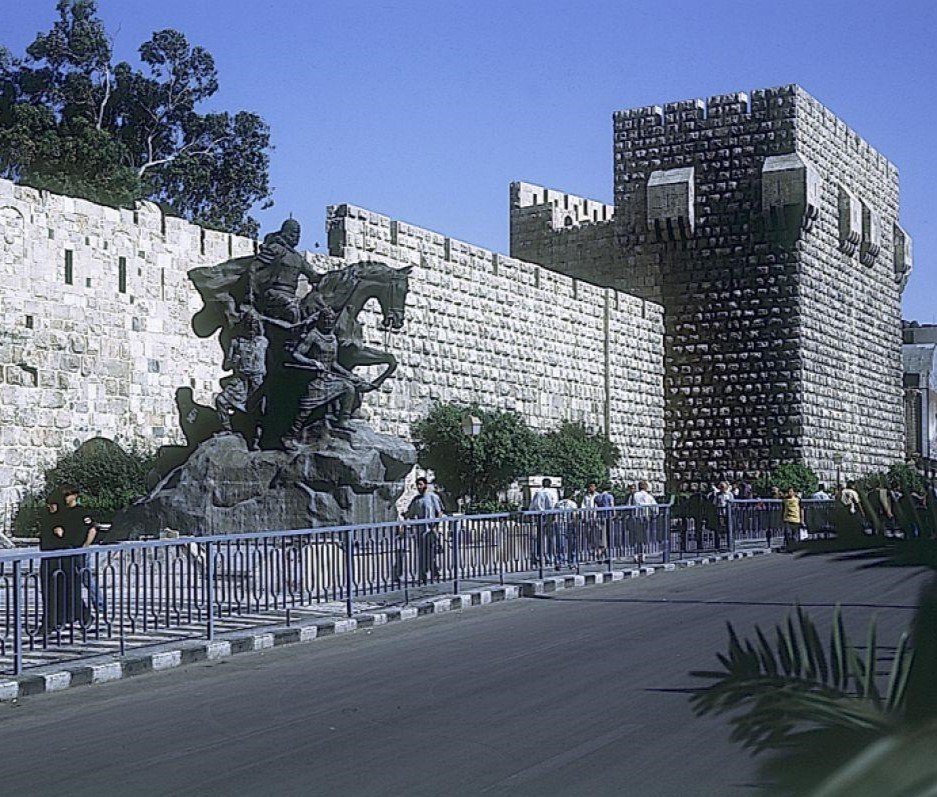
Citadel of Damascus
The Citadel of Damascus traces its origins to the late 11th century, when the Turkmen commander Atsiz bin Uvak fortified the site in 1076 to secure the city against Crusader and Byzantine threats. Its strategic position on the north west edge of the Old City allowed it to guard key gates and the adjoining markets. Expanded under the Seljuq ruler Tutush I and later strengthened by the Burid and Zengid dynasties, it became a prized seat of power. In 1174, Saladin seized Damascus and made the citadel his residence, initiating further improvements. The most significant reconstruction came between 1203 and 1216 under Sultan al Adil I, who rebuilt it almost entirely in massive stone to withstand the era’s advanced siege engines. Over the centuries, it endured Crusader assaults, Mongol invasions, and earthquakes, yet remained a symbol of authority and resilience at the heart of Syria’s capital.