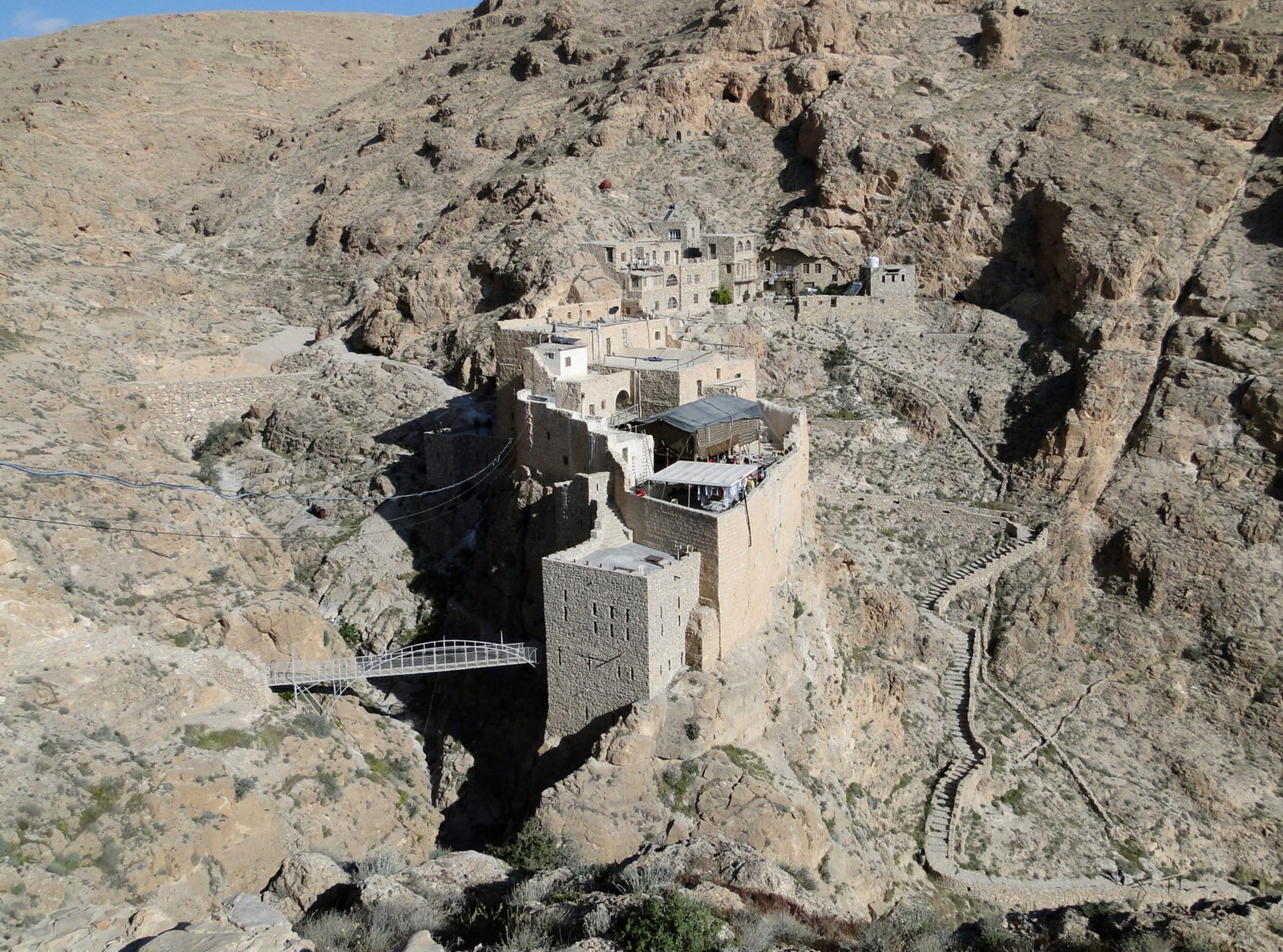
Deir Mar Musa al Habashi
High above the barren slopes east of al Nabek, Deir Mar Musa al Habashi — the Monastery of Saint Moses the Abyssinian — preserves a history that stretches back over fourteen centuries. Tradition holds that its founder, an Ethiopian prince turned monk, sought solitude here in the 6th century, establishing a hermitage that became part of the early monastic network of the Syrian desert. The present stone church, rebuilt in 1058 AD as recorded in Kufic inscriptions, reflects the enduring Byzantine Syriac architectural blend of the region. Within its modest walls survive some of the finest intact medieval frescoes in the Levant, painted between the 11th and 12th centuries, depicting Christ, the saints, and biblical scenes in vivid mineral pigments. Over the medieval period, Mar Musa served both as a spiritual retreat and a waystation for pilgrims crossing the steppe. By the early 19th century, it had fallen into abandonment, its frescoes fading under dust and neglect, until a late 20th century restoration revived it as a functioning monastery. Today, it stands not only as a place of worship, but as a rare, living witness to the continuity of Christian monasticism in the Syrian highlands.