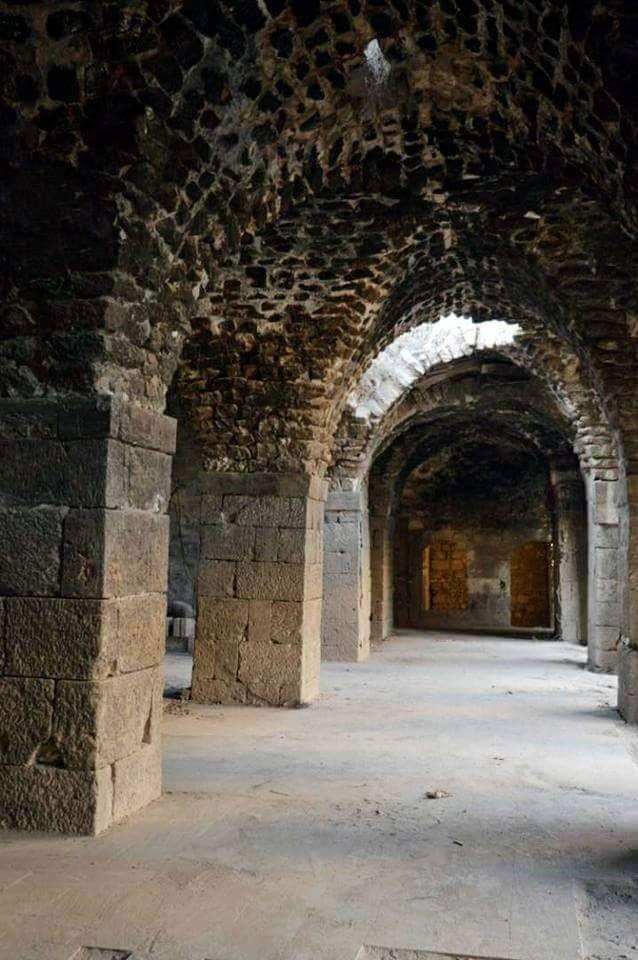
Khan al-Qadi
Built in the mid 15th century during the waning days of the Mamluk era, Khan al Qadi has stood for over five centuries as a sentinel of Aleppo’s mercantile glory. Built around 1450 CE, its name — “the Judge’s Khan” — recalls the days when the city’s qadi not only upheld the law but also safeguarded the lifeblood of trade. Beneath its monumental arched gateway, caravans from Persia, Anatolia, and the Mediterranean once unloaded silks, spices, and precious metals, their goods stored securely behind thick stone walls and heavy timber doors. The khan’s central courtyard bustled with merchants striking deals in a dozen tongues, while upper rooms offered weary travellers a night’s rest within sight of their wares. Through Ottoman prosperity, colonial intrigue, and the upheavals of modern war, Khan al Qadi has endured as a witness to Aleppo’s role as a Silk Road crossroads — a place where commerce and justice once met beneath the same vaulted roof.