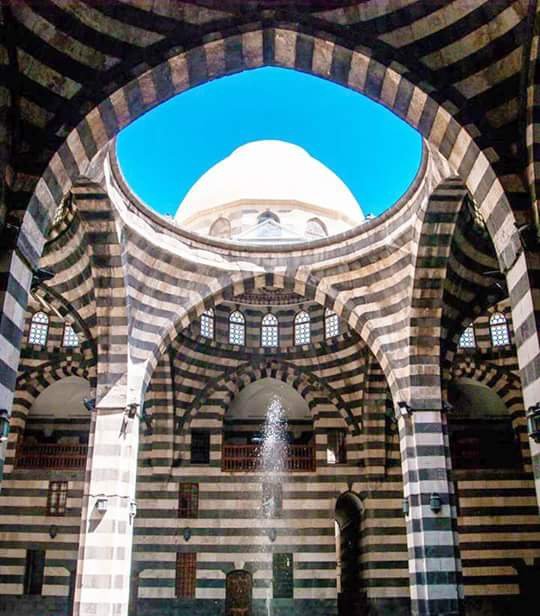
Khan Asʿad Basha
Khan Asʿad Basha, commissioned in 1751–1752 by the influential Ottoman governor Asʿad Pasha al Azm, is the largest and most imposing khan in Damascus, built at the height of the city’s role as a commercial crossroads of the Ottoman Empire. Rising within the bustling al Buzuriyah Souq, it served as a fortified lodging and trading hub for merchants arriving from Baghdad, Aleppo, Beirut, and the Arabian Peninsula, many of them traveling along the Hajj routes. Its monumental gateway opened into a vast square courtyard with a central fountain, surrounded by two stories of arcaded chambers for storing goods and housing traders. The alternating black basalt and white limestone bands (ablaq), the eight domes, and the soaring arches reflect the grandeur of 18th century Damascene architecture. Over the centuries, the khan witnessed the ebb and flow of regional trade before falling into disrepair, only to be meticulously restored in the 1990s — a revival that earned it the Aga Khan Award for Architecture and secured its place as a living monument to Damascus’s mercantile past.