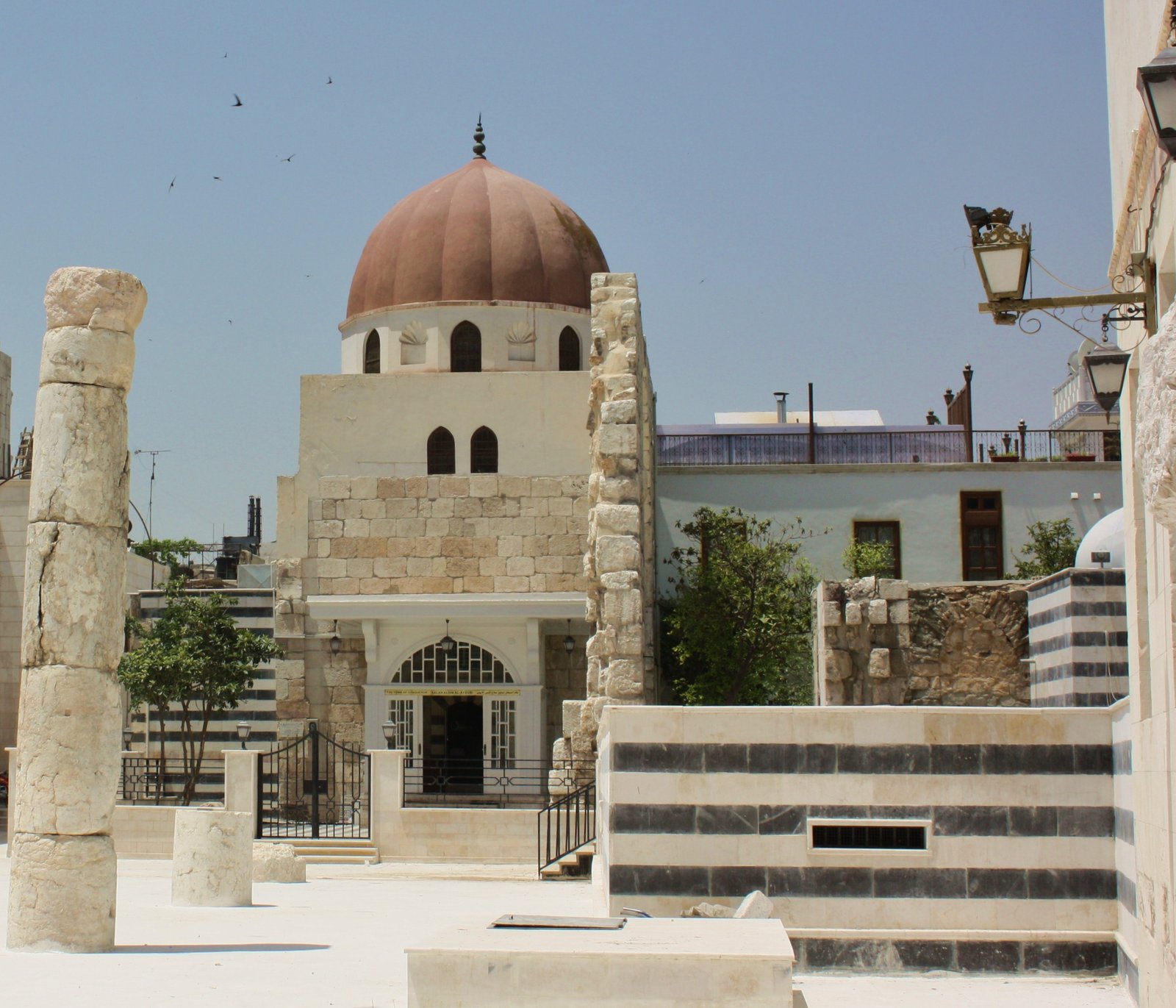
Mausoleum of Saladin
The Mausoleum of Saladin, beside the northwestern corner of the Umayyad Mosque in Damascus, was built between 1193 and 1196 by his son al Malik al Afdal Nur al Din ‘Ali to honor the great Ayyubid sultan after his death in 1193. Saladin, famed for uniting Muslim forces and reclaiming Jerusalem from the Crusaders in 1187, was initially buried in the Damascus Citadel before his remains were moved here in 1195 on the holy day of ʿAshura. The tomb was originally part of the Madrasa al Aziziyya, founded soon after by his other son, al Malik al Aziz ‘Uthman, though little of the school survives today. Built in the Ayyubid style, the mausoleum’s square chamber, ablaq stonework, and domed roof reflect the architectural traditions of its era, while the original carved wooden cenotaph remains a masterpiece of medieval craftsmanship. Over the centuries, the site has been restored and embellished — most notably with a marble sarcophagus gifted by German Emperor Wilhelm II in the late 19th century — preserving it as both a place of reverence and a lasting monument to one of the medieval Islamic world’s most celebrated leaders.