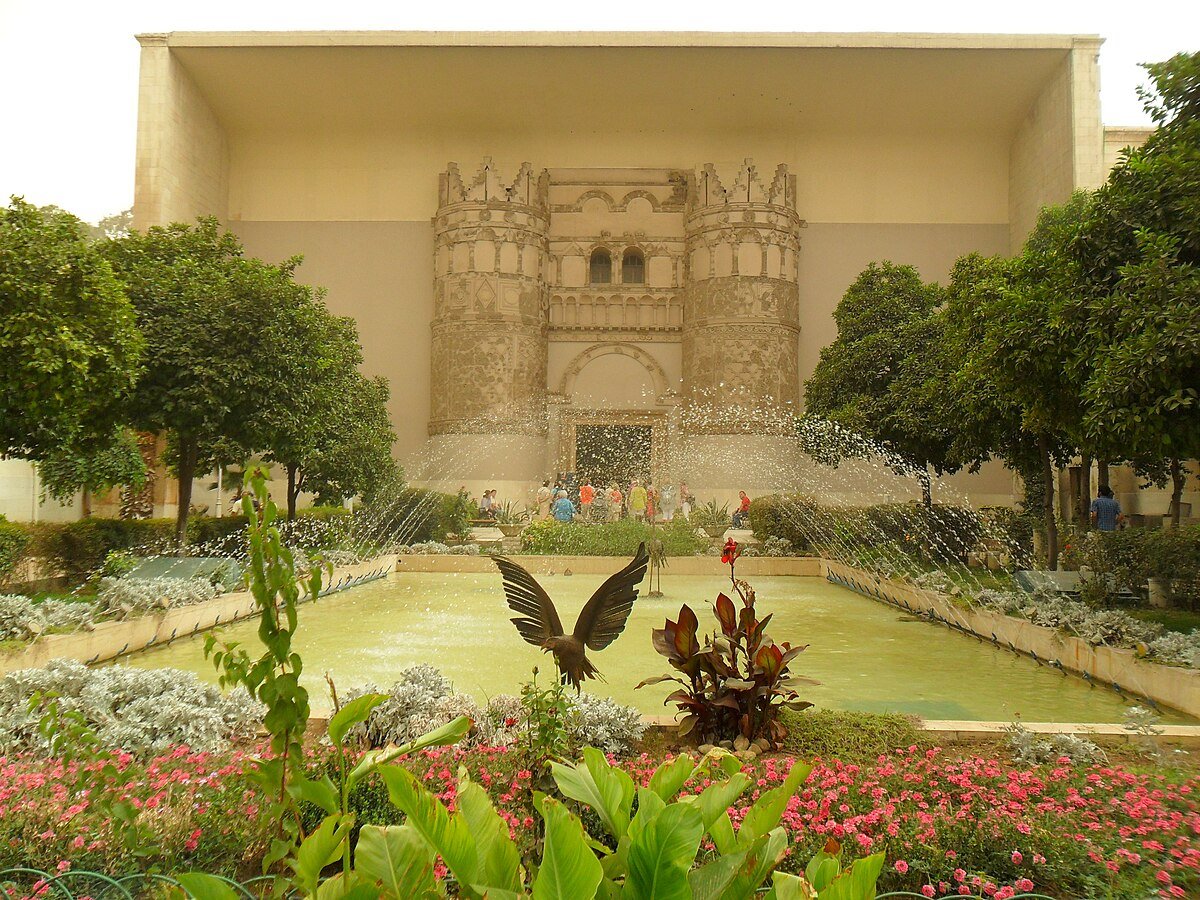
National Museum of Damascus
The National Museum of Damascus, established in 1919 by the Syrian Ministry of Education under the reign of King Faisal I during the short lived Arab Kingdom of Syria, is the crown jewel of the nation’s cultural heritage — a place where more than eleven millennia of history are gathered under one roof. Expanded over the decades, it welcomes visitors through the breathtaking reconstructed façade of Qasr al Hayr al Gharbi, an 8th century Umayyad desert palace transported stone by stone from the Syrian steppe. Inside, its galleries lead you on a journey from prehistoric flint tools and Neolithic figurines, through the treasures of Ebla, Mari, and Ugarit — including the world’s first alphabet — to the grandeur of Greco Roman mosaics and the vivid wall paintings of the 3rd century Dura Europos Synagogue. The Islamic wing glows with calligraphy, ceramics, and carved woodwork, while the museum’s garden displays ancient statues and inscriptions beneath the Damascus sky. More than a collection of artifacts, the museum is a living chronicle of Syria’s civilizations, offering a rare chance to walk through the layers of human history that have shaped the land.