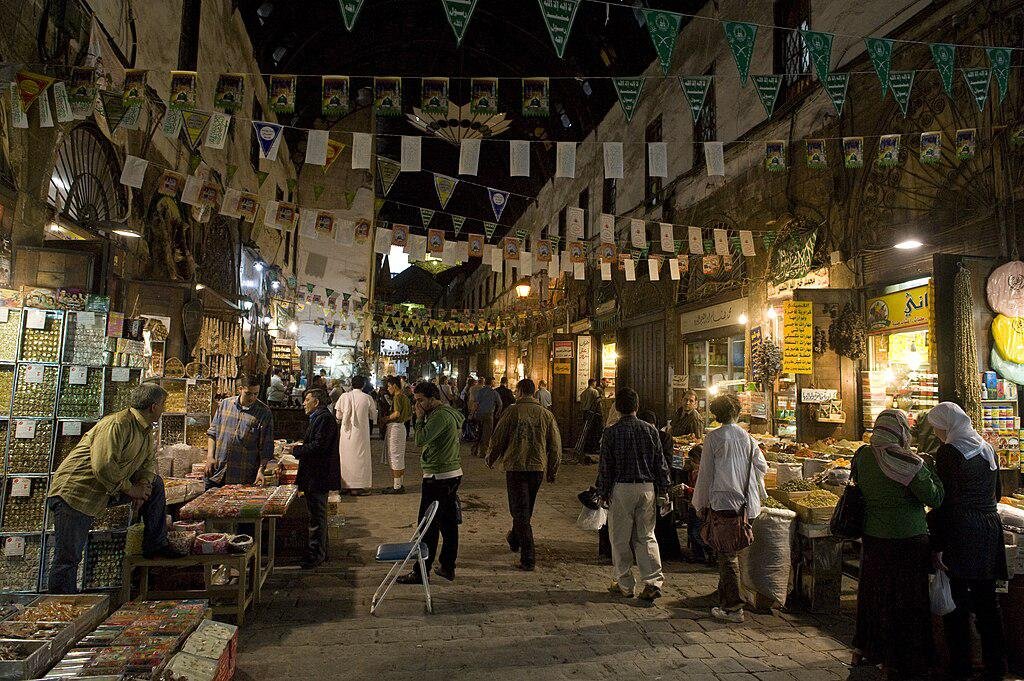
Souq al Buzuriyah
South of the Umayyad Mosque, Souq al Buzuriyah has been a cornerstone of Damascus’s commercial life for centuries, its history woven into the city’s very identity. In the Mamluk era it was known as Souq al Kameh — the Wheat Market — before evolving into the city’s main center for spices, seeds, and herbal remedies, from which it takes its present name. During the Ottoman period, the construction of Khan Asʿad Pasha in the 18th century transformed the area into a grand hub for Silk Road caravans, where merchants from across the Levant, Persia, and Anatolia traded goods under its domed halls. The souq’s stone paved lane still follows the same path trodden by traders for hundreds of years, flanked by historic khans and perfumers’ shops whose scents have guided visitors long before maps were needed. Every arch, wooden beam, and weathered shopfront tells of Damascus’s enduring role as a meeting point of cultures, where commerce and tradition have flourished side by side since medieval times.