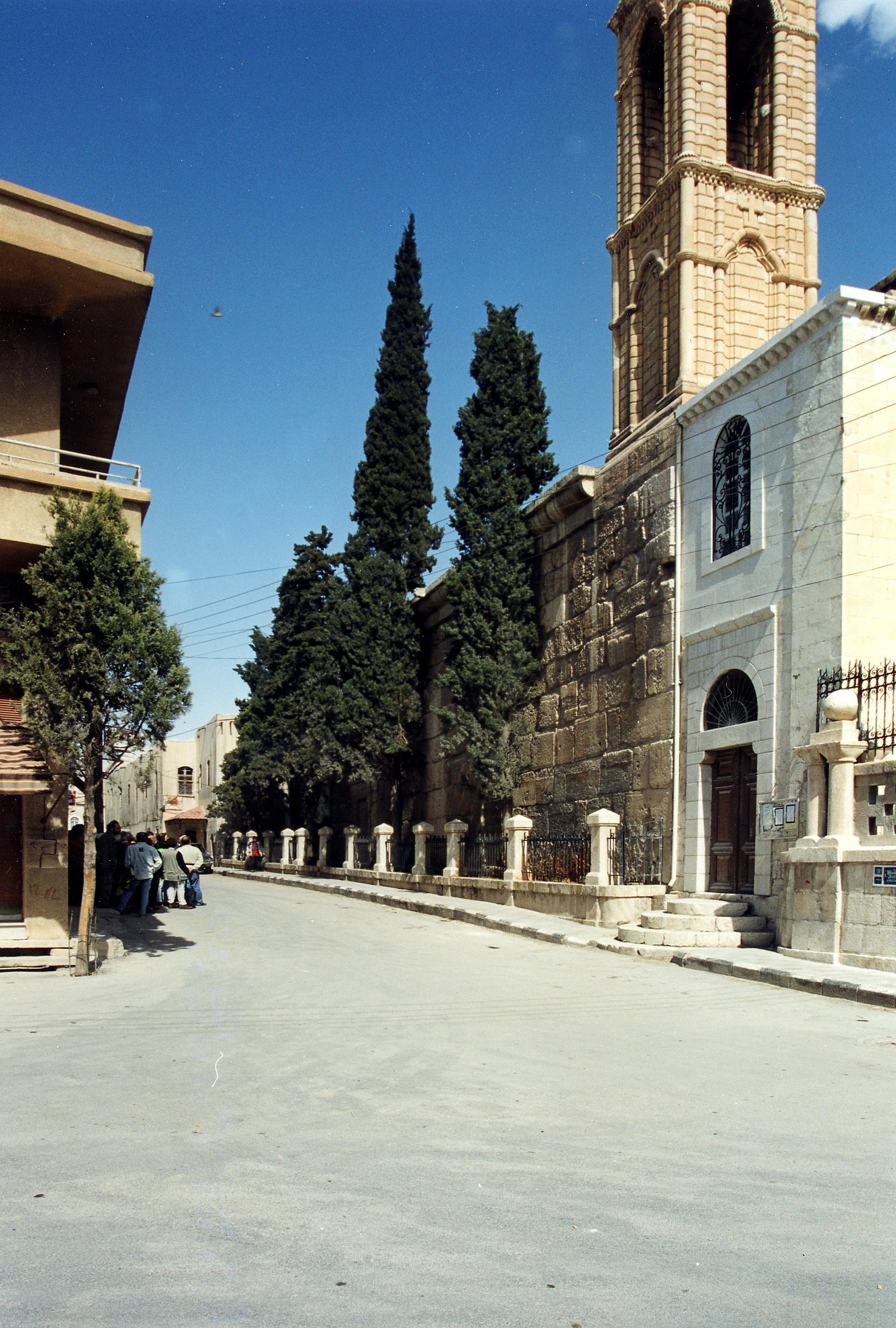
Yabrud
Yabrud, nestled on the eastern slopes of the Anti Lebanon Mountains about 80 km north of Damascus, is one of Syria’s oldest continuously inhabited towns, with a history stretching back tens of thousands of years. Archaeological discoveries in the nearby Iskafta Cave in 1930 revealed Paleolithic tools and remains that defined the prehistoric Jabroudian culture, marking the area as a cradle of early human settlement. In antiquity, Yabrud was a religious center, home to an Aramaic temple dedicated to Baalshamin, later transformed by the Romans into a grand temple for Jupiter. With the spread of Christianity in the 4th century CE, tradition holds that Saint Helena ordered the temple’s conversion into a church — today’s Cathedral of Saints Constantine and Helena — making it one of the oldest churches in Syria. Mentioned in Mesopotamian records of the 1st century BC and by Ptolemy in the 2nd century AD, Yabrud has witnessed the rise and fall of empires, preserving in its stones a layered narrative of pagan worship, Roman grandeur, and Christian devotion that continues to define its identity.