
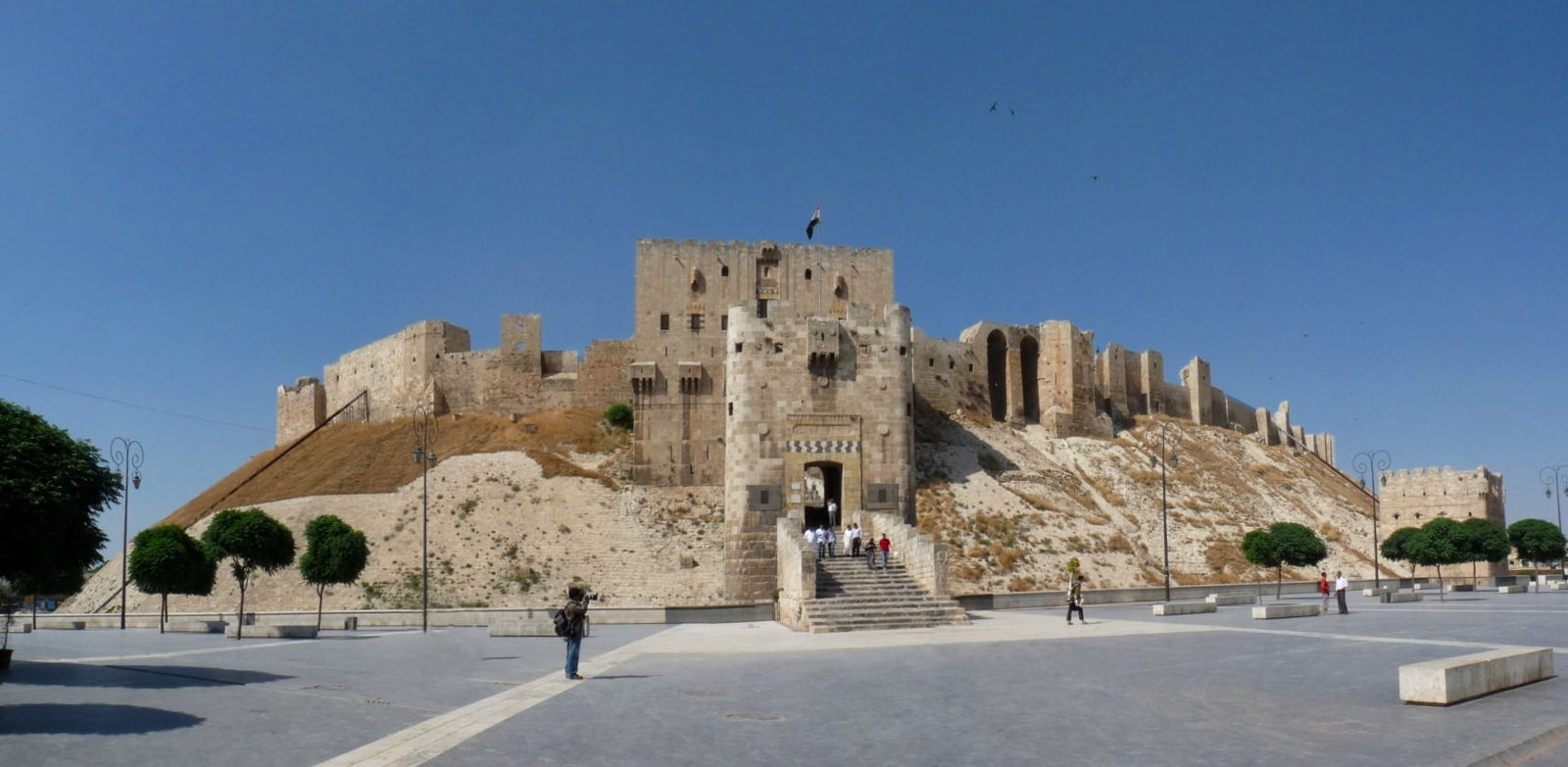
Rising proudly above the heart of the old city, the Citadel of Aleppo is more than stone walls and towers — it is a living chronicle of over four thousand years of history. Archaeological evidence shows that this hilltop was first sacred ground in the 3rd millennium BCE, crowned by a temple to the storm god Hadad. Successive empires — from the Neo Hittites and Assyrians to the Greeks and Romans — left their mark here, each reshaping the summit to suit their needs.
Its most striking form took shape in the 12th and 13th centuries under the Ayyubid rulers, heirs to Saladin’s legacy, who transformed the mound into one of the most formidable fortresses of the medieval Islamic world. They built the monumental stone bridge, the bent axis gateway, and the massive defensive towers that still awe visitors today. Within its walls, rulers held court in the Throne Hall, worshippers prayed in the mosque, and soldiers guarded deep cisterns to withstand long sieges.
The citadel has endured Mongol invasions, Mamluk repairs, Ottoman garrisons, and the tremors of modern conflict, yet it remains a symbol of Aleppo’s resilience. Walking its ramparts is to step through centuries — from Bronze Age sanctuaries to Ayyubid battlements — and to feel the enduring spirit of a city that has always risen again.

Nullam dignissim…